
About the Armenian Radio Archive
The Public Radio Archive is the largest Armenian audio archive, preserving approximately 100,000 recordings — songs, performances, broadcasts, concerts, and more.
Our History
The history of Armenian radio begins on September 1, 1926. On this day, the first pilot broadcast was aired and the phrase "Yerevan speaks" was heard for the first time. The Oriental Choir — later the Republican Radio of Armenia's Merangulyan Folk Instrument Ensemble — performed live for the very first time.
From April to June 1927, a radio network was established and broadcasts were transmitted at regular times. In those early years, the radio operated from the 4th floor of the Intourist Hotel (now Grand Hotel Yerevan).
In 1957, a new Republican Radio building was commissioned at Mravyan-5, Yerevan. Three rooms on the 3rd floor were set aside for storing recordings, and the first approximately 60 recordings were placed on special shelves — marking the beginning of the audio library's history.
In 1965, the fund recordings editorial office was founded (recordings at that time were made at 78 rpm). Over the years, recording technology changed and the collection grew. A dedicated space in the building's basement was allocated to the library, with controlled conditions for long-term preservation — humidity, temperature, and security.
An artistic council was established to review all programmes and recordings. Each entry was catalogued with its author, performer, sound engineer, operator, and year of recording — arranged by genre.
The Collection Today
100,000+
Total Recordings
97,000
Golden Fund Recordings
28,000
Works by Armenian Composers
Today approximately 20,000 authored musical performances, literary-artistic broadcasts, recitations, and radio plays — totalling more than 150,000 hours — are preserved. The archive holds recordings not only in Armenian and Russian, but also in Kurdish, Yezidi, Azerbaijani, and Arabic: songs, cultural and children's programmes, radio plays, performances by great Armenians, interviews, and more.
Since 2017, a new digitisation process has been under way, incorporating modern technologies to process the existing stock, improve recording quality, ensure long-term preservation, and make the archive accessible to the public. The Renaissance Cultural and Intellectual Foundation has made a major contribution to this work.
The Golden Fund
The "Golden Fund" contains approximately 97,000 recordings, of which 28,000 are works by Armenian composers. Each recording is accompanied by the recording date, author of music and lyrics, a biography, and a photo album. Recordings are presented by genre: classical, folk, pop, radio plays, special performances, interviews, and speeches by great figures. The site is available in three languages.
Archiving continues throughout the year as the library is updated with new recordings and names.
Here you can hear songs, performances, and concerts that have become classics, as well as unique recordings that were unknown to many until now. Carrying the history of the past and the present, these voices and songs grow more valuable with every visitor and listener.
Today it is possible not only to enjoy the gems of the Golden Fund but also to create new ones. In the recently reopened Public Radio recording studio, «Radio Studio», where most of the archive's recordings were made over the decades, new works are already being recorded that will testify to tomorrow's preserved past.
Dear users, we welcome your comments and suggestions.
Digitization Partner and Technology Supporter
As part of the initiative marking the 100th anniversary of Armenian Public Radio, Digital Pomegranate has taken on an important role in providing technological support for the digitization and public accessibility of the Radio’s rich audio archive. The company has developed the archive’s website and mobile applications, creating new opportunities to preserve, explore, and make Armenia’s audio heritage accessible to new generations.
This initiative is an expression of Digital Pomegranate’s corporate social responsibility—a gift to Public Radio in honor of its centenary. It represents the company’s contribution to preserving Armenia’s cultural heritage by putting modern technology at the service of national memory and the transmission of cultural values.
The voices and recordings that carry a century of history are now accessible through new digital platforms, bringing together the invaluable heritage of the past and the technological possibilities of the future.
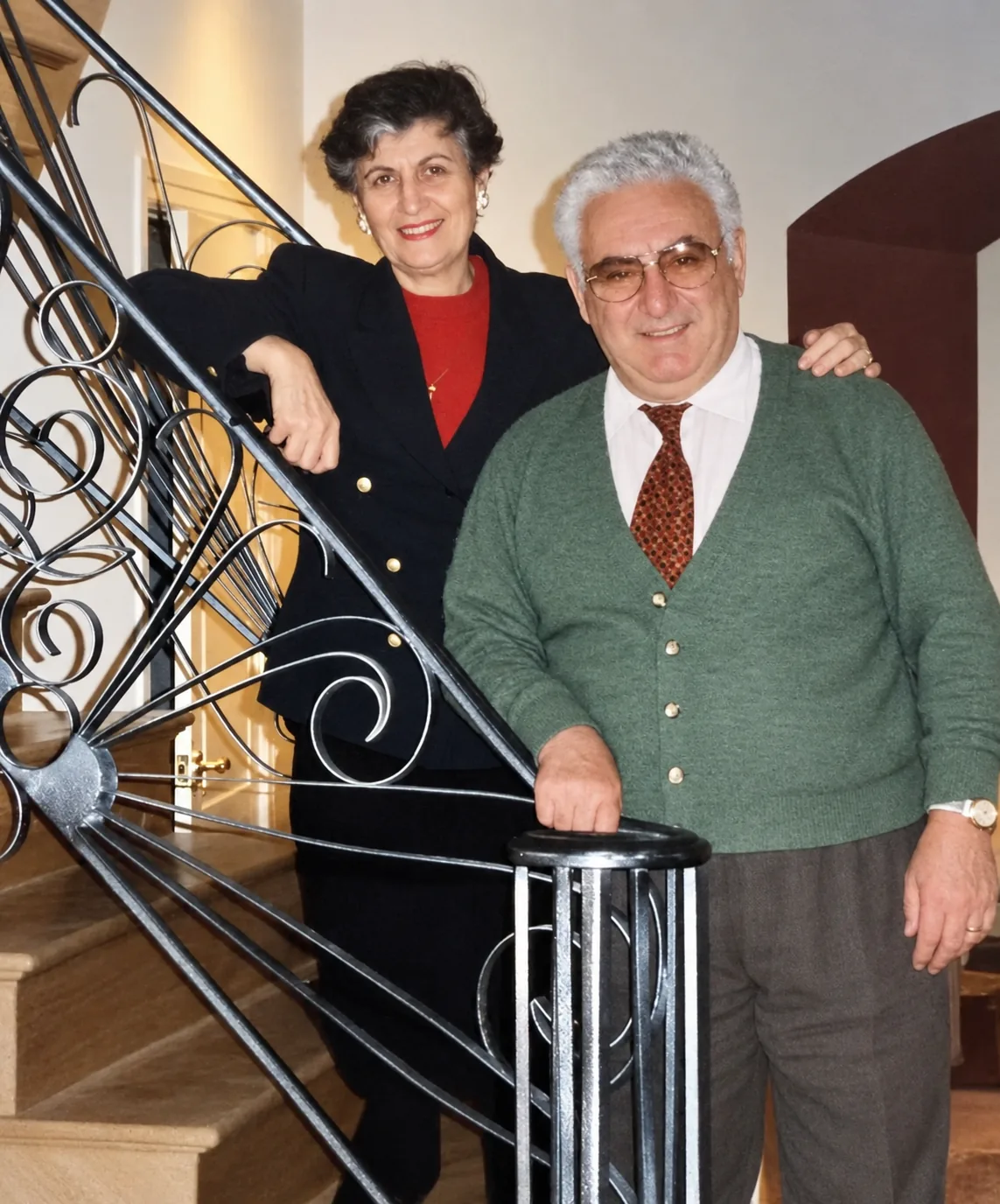
Digital Pomegranate dedicates this initiative to honoring Hambartsum and Mary Ingilizian, whose enduring love of Armenia and its rich musical heritage inspired this work.