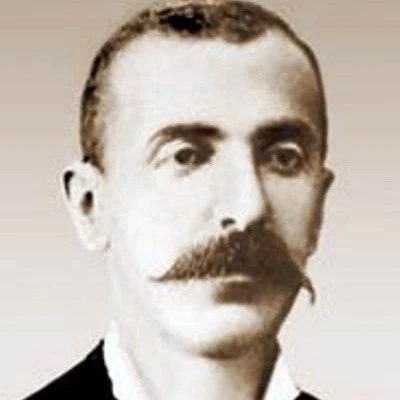
Born in Adrianople. Hakob Paronyan received his primary education at the Arshakunyan school. His first teacher was Nerses Varzhapetyan, who later became a well-known churchman. Paronyan mentions him with great respect in his story "Azgayin syuner" ("National Pillars"). Religious subjects were taught in depth at the school, and the pupils could not receive a full education there. Paronyan, however, studied languages, especially Armenian. He graduated from the school in 1857 and entered the Greek school of Adrianople, where he studied for only one year. After that, like many Armenian writers, because of financial hardship Paronyan changed many occupations, which only hindered his creative life. This resourceful young man, full of dreams, found work at a pharmacy, where he wrote many poems, then at a well-known French tobacco company, after that with his younger brother as a bookkeeper, at a French agency as a translator, and as a private tutor, and he taught at the Üsküdar school. While working at the school, Paronyan met the poet Simon Felekyan and at his suggestion began working at the newspaper "Yeprat" ("Euphrates"). He later became the editor of that newspaper. A decisive role in Paronyan's creative life was played by his acquaintance with Harutyun Svajyan and the satirical newspaper "Meghu" ("Bee"). Some time later he became its editor as well. However, because of its critical stance, the authorities soon closed the newspaper. After working at "Meghu", Paronyan created his own periodical collection called "Tatron" ("Theatre"), which appeared for only three years. At the same time he published the collection "Tatron Mankants" (Children's Theatre). Five or six years later he managed to create a new satirical newspaper, "Khikar" ("The Wise One"), which shared the fate of the previous newspapers: it was closed. Paronyan's best works were created in these collections. He worked almost alone and filled all the pages through his tireless labour. Paronyan was confident that he was leaving a rich legacy to his descendants. In the last years of his life poverty forced the great satirical writer to work as a bookkeeper again. This work was extremely hard for him. In addition, by that time an incurable disease (tuberculosis) had completely destroyed his health. He died in Constantinople. A street, a school and the Yerevan State Musical Comedy Theatre in Yerevan are named after Paronyan.