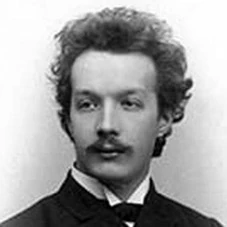
Julius Conus was born in Moscow. He studied at the Moscow Conservatory in the class of violin. In 1888 he graduated from the conservatory with a gold medal, and the following year he left for Paris. While in France he gave solo concerts, worked in the Colonna orchestra and in the Grand Opera orchestra. During 1891 to 1893 on Tchaikovsky’s recommendations he worked as accompanist of the New York Symphony Orchestra, and performed as a soloist in various cities of the United States. Since 1893 he taught at the Moscow Conservatory at the Department of violin. In 1901 he left teaching at the conservatory, after which he worked at the Music and Drama School of the MFO, worked as accompanist in the Bolshoi Theater Orchestra, organized his quartet and quartet meetings, and continued his concert activity. He immigrated to France in 1919. He taught violin and theoretical subjects at the Russian Conservatory, worked as an editor at the Russian music publishing house S. A. Kusevitsky, introduced the engraving machine "Lux" of his own invention, which printed notes of various publishers in Paris, also continued to compose music. In 1933 he worked on the music for the ballet “Icarus”. After moving to Moscow he taught at the Central Correspondence Music and Pedagogical Institute. He became a member of the Union of Composers of the USSR. He died in Vladimir region.