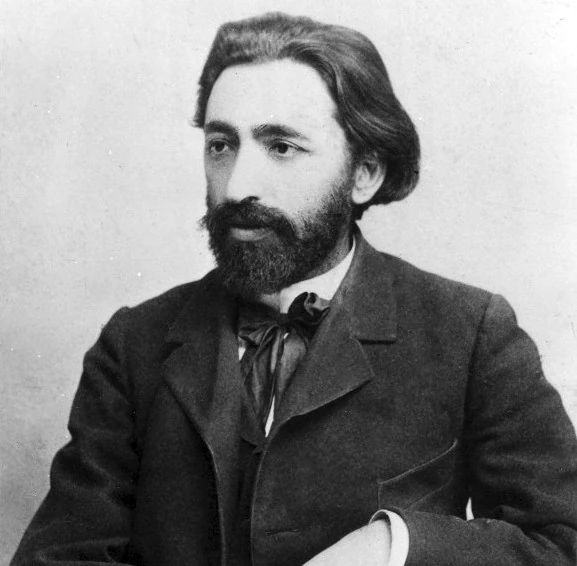
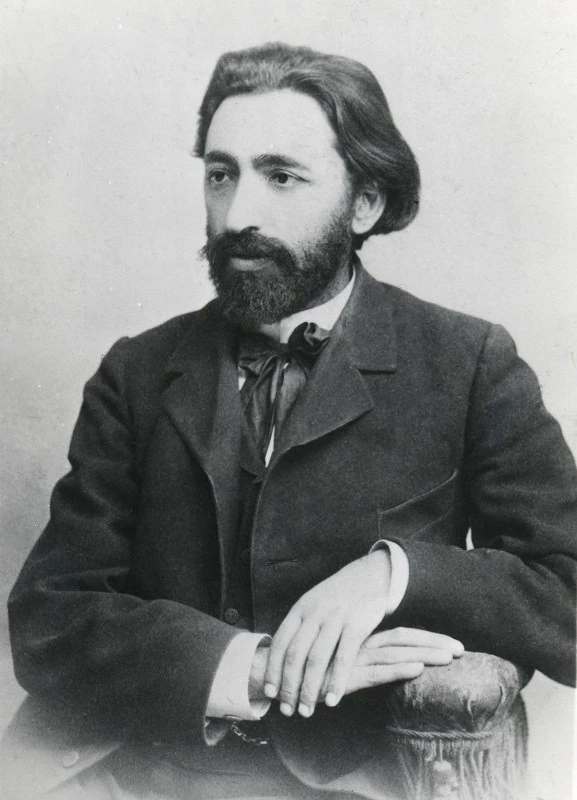
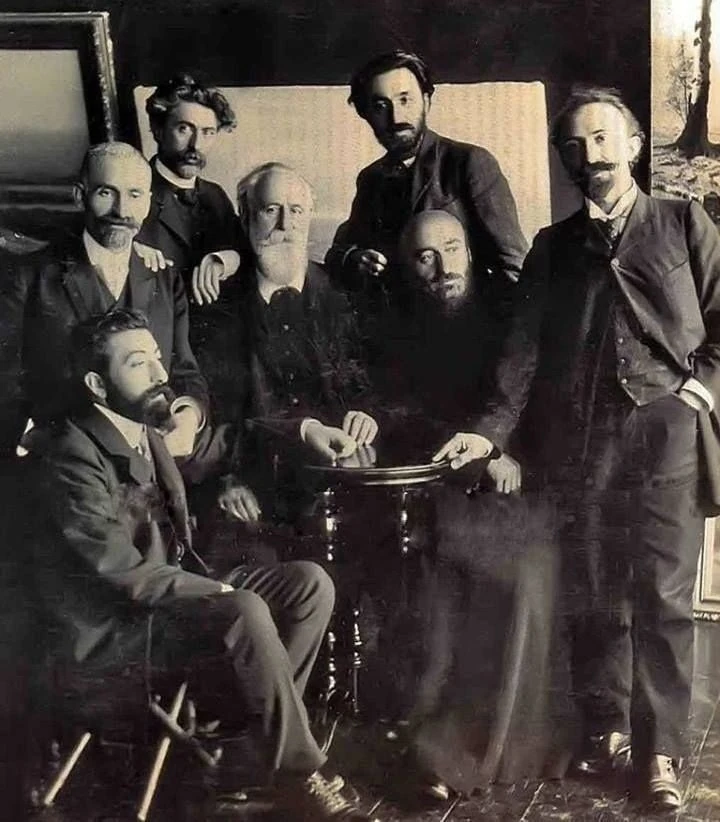
He was born in the city of Van in Western Armenia. In 1868 he moved to Agulis, where he received his primary education. In 1875–78 he studied at the Aramyan School in Tabriz, and in 1878–79 at the Gevorgian Seminary in Etchmiadzin. In 1894 he graduated from the Faculty of Literature and Social Sciences of the University of Geneva. He began working at the age of 15 and was a manual labourer, a photographer, a telegraph operator and so on. For many years he taught at schools in various cities. He worked as editor of "Kriv" (Struggle) of the Association of Armenian Worker Revolutionaries (1894, Tiflis), of the clandestine "Shavigh" (Path) (1894–96, Tehran), and in 1911–12 of the weekly "Gharabagh" (Karabakh) (Shushi). Vrtanes Papazyan collaborated with a number of Armenian-language Russian and European publications, including the journal "Ardzagank" and the newspapers "Mshak" and "Murch". He began writing articles in 1883. For his work on the Gypsies, "Hay boshaner" (The Armenian Bosha, 1899), he was admitted a year later to the Imperial Moscow Ethnographic Society. He was an active participant in the national liberation movement of the Armenians of Western Armenia; for his pro-Russian views and anti-Ottoman propaganda he was sentenced to three years' imprisonment and was later released. He spent the last years of his life in Yerevan. Papazyan wrote a number of novels, short stories, dramas, essays on the history of literature and so on. The main theme of many of his works is the struggle of Armenians against Turkish oppression. Among his best-known works are "Namakner turkats Hayastanits" (Letters from Turkish Armenia, 1889) and "Patmutyun hayots grakanutyan skzbits minchev mer orery" (History of Armenian Literature from Its Beginnings to Our Days, 1910). In the USSR Papazyan was regarded as a "petty-bourgeois" writer; it was acknowledged that many of his works raised the hard life of ordinary Armenians and Kurds in the Ottoman Empire and their oppression by the authorities. Vrtanes Papazyan also translated works of Russian classical writers into Armenian. He died in Yerevan. He was buried in the Komitas Pantheon.